SelectREE presents at the NLR Innovation Showcase, Avon, Colorado, September 2026. Book a meeting
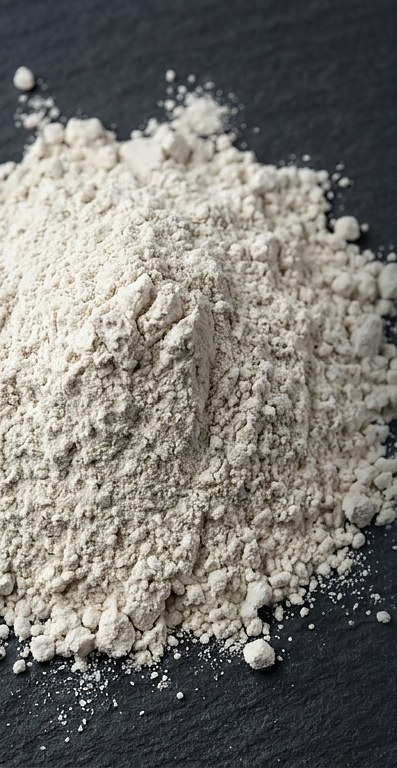
Rare earth oxide powder on slate

Rebuilding rare earth separation from first principles.

A new way to separate valuable metals, starting with the rare earths the West cannot get. Molecularly designed carbon electrodes, switched by potential.

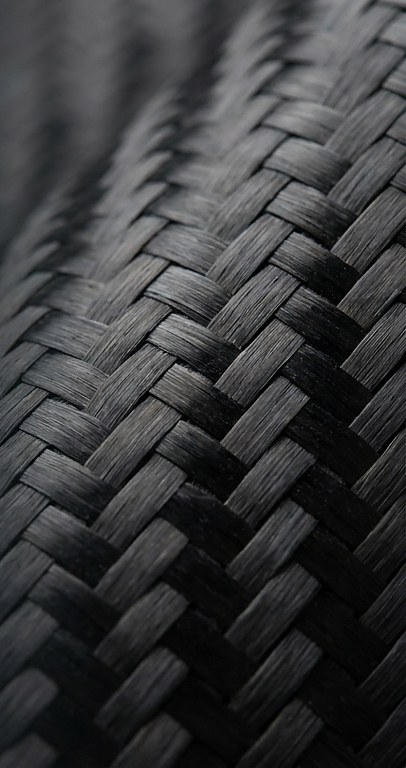
Woven carbon cloth, close up

The problem

The bottleneck is separation, not mining. China does almost all of it.

The strongest permanent magnets, in electric vehicles, wind turbines and defence systems, need neodymium and praseodymium; the high temperature grades add terbium and dysprosium. Ore is mined in many countries. Almost all of it is sent to one country to be separated into single elements.

Mining is spread out. Separation is the choke point. Without the capacity to turn mixed oxides into single metals, every mine and every magnet plant outside China depends on a Chinese step.

MiningConcentrateSeparationMetal, alloyMagnet
Rare earth mining58%
Separation into oxides~90%
Heavy REE separation~100%

China's share of each step. Sources: US DOE, Rare Earth Magnets Supply Chain Deep Dive, 2022; IEA Global Critical Minerals Outlook 2025 (91% of separation and refining, 2024).

Why it is hard

Chemistry, not scarcity.

Neighbouring rare earths carry the same 3+ charge and are almost the same size. Praseodymium and neodymium differ by about 0.7% in ionic radius; terbium and dysprosium by about 1.2%. A separating chemistry has to read differences of about one picometre.

Ionic radii: R. D. Shannon, Acta Crystallographica A32 (1976), coordination number 6.

Today's answer

Solvent extraction: a small gain per stage, so a very long cascade.

An extractant in kerosene is contacted with the acidic feed. Neighbouring elements load almost equally in each contact, so purity takes long chains of mixer-settler stages. Loading and stripping are driven by acid; caustic follows to neutralise. The plant is large, fixed, and designed and financed as one piece.

The idea

A molecular pocket on a conductor. The potential switches the pocket.

A rigid, redox-active aromatic unit is bonded covalently to graphitic carbon. Donor atoms on the unit form a coordination pocket, and the pocket sets which ion fits. Because the unit sits on a conductor, its redox state, and with it the shape and charge of the pocket, is set by the electrode potential.

Capture at one potential, release at another. Each target ion has its own capture and release window. Stepping the potential is the whole separation step: no extractant, no stripping acid, no solvent inventory. The support is commodity activated carbon from coconut shell, coal or wood, serving as electrode and substrate in one material.

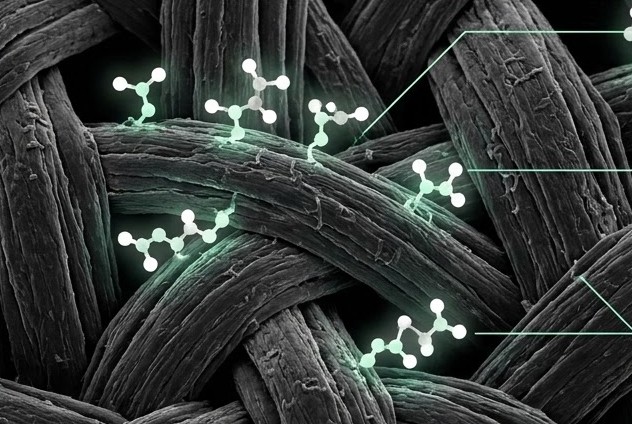
Illustration over a scanning electron micrograph: commodity carbon cloth fibres carrying surface-bound molecules

A solid, reusable material sits in the dissolved feed: a carbon textile carrying molecules bound to its surface, each one interacting differently with the metal ions in the solution.

Porous carbon electrodes

Functionalised with surface-bound molecules that act as chemical locks.

Potential-driven capture

Target ions bind under one voltage and are released cleanly under another.

No organic solvent

Aqueous, electrically driven. Acid to dissolve the feed, a reagent to precipitate the oxide, standard waste water treatment.

Commodity carbon cloth carrying surface-bound molecules. Illustration; the real fibres and molecules are in the Technology Evidence File.

The electron is the reagent

Capture potential REE³⁺ redox state 1: ion bound ± n e⁻ Release potential REE³⁺ redox state 2: ion released Ion A capture release Ion B capture release
Schematic. Each ion has its own capture and release window on the potential axis.

One electrode, four steps, then again

LoadRinseReleaseReset E time → E capture E release feed in water single element out ready for next cycle
Schematic. The electrode is reused; the feed does not meet an organic phase.

1 · Load

Capture the chosen element

At the capture potential the pocket takes the target ion out of the dissolved feed and leaves the others in solution.

2 · Rinse

Wash the electrode

Unwanted solution is removed from the pores before release, so the product stream is clean.

3 · Release

Step the potential

The redox state changes, the pocket opens, and the element leaves into a clean, concentrated stream.

4 · Reset

Run again

The electrode returns to the capture state. Solvent volume is traded for cycle count on a reusable solid.

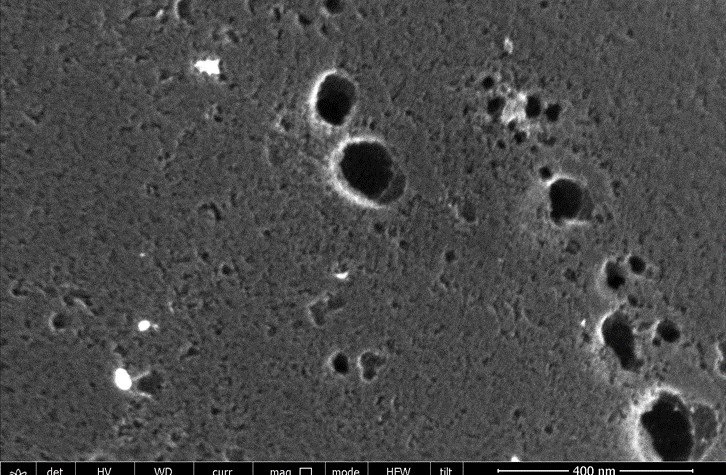
Scanning electron micrograph of bare activated carbon cloth at 400 nanometre scale, showing the pore mouths in the fibre surface
Bare activated carbon cloth, SEM. D. Malka et al., J. Electrochem. Soc. 166, A1147 (2019)

The base

Commodity activated carbon: support and electrode in one material.

Macropores carry flow, mesopores give access, micropores give area. The grafted layer covers the fibre surface and fills the pore mouths, and stays there: the bond to the carbon is covalent. The material rests on a decade of published work on grafted carbon cloth in energy storage, now pointed at a new job.

Three routes, side by side

Solvent extractionIon exchange, chromatographySelectREE, design intent
SelectivitySmall gain per stageResin and complexing eluentPocket plus potential
ReleaseStrong acidEluent or acidPotential step
MediumSolvent in keroseneResin beadsGrafted carbon
ConsumablesAcid, caustic, solventEluent, regenerantElectricity
FoulingInterfacial crudFe, Al, Si, organicsTo validate on real feed

The right-hand column is what SelectREE is designing toward. It is the thesis until the development programme measures it.

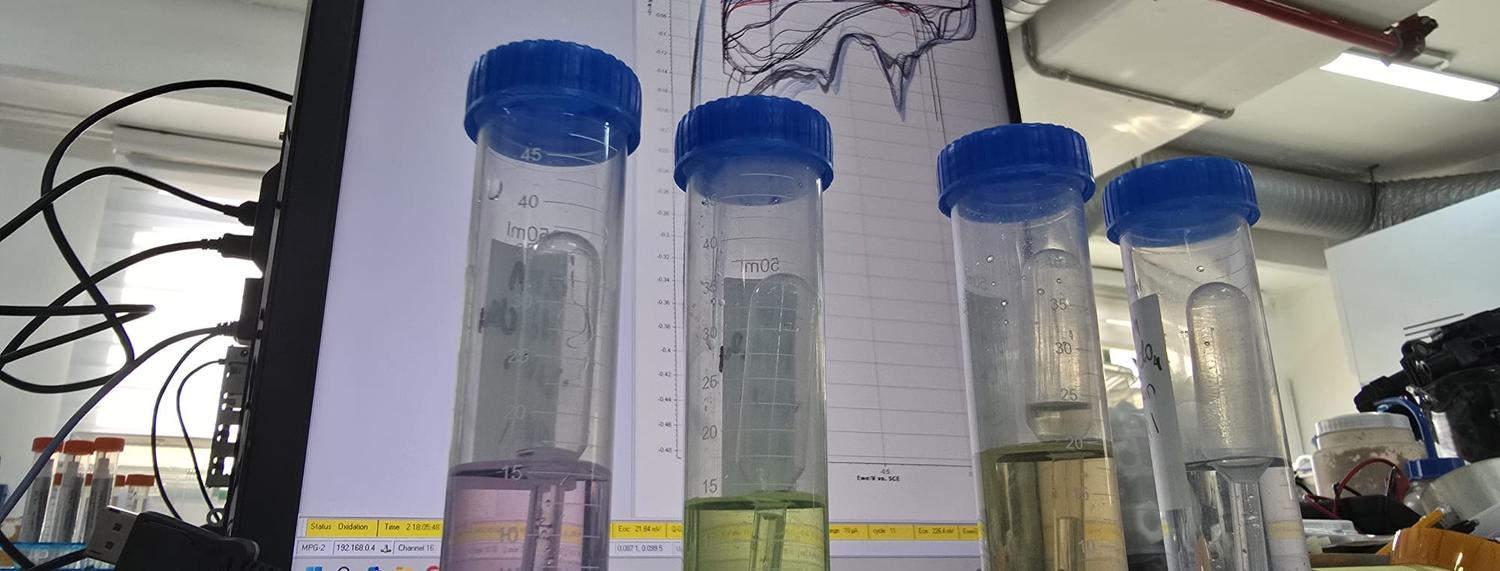
Four rare earth sample solutions in graduated vials in front of a monitor showing cyclic voltammetry traces
Sample solutions and cyclic voltammetry traces at the bench, Petah Tikva

Team

Chemistry, electrochemistry, and people who know the critical minerals market and its capital. In one room.

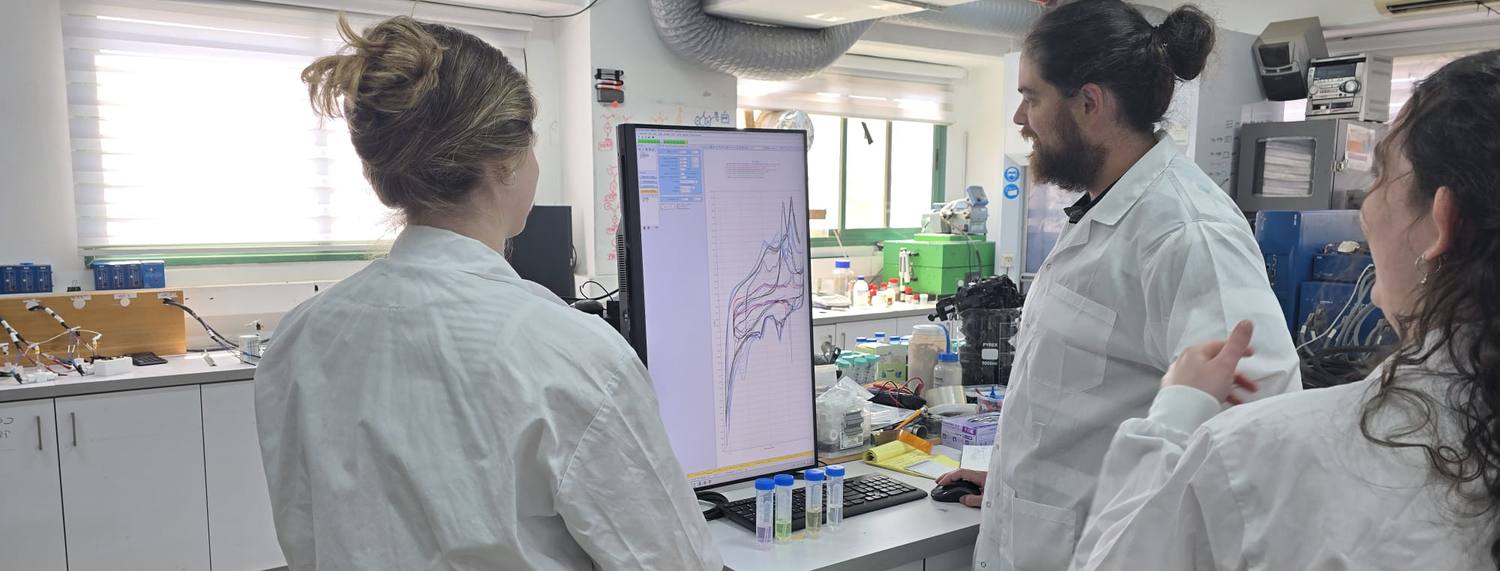
Six people work in the company today, in the laboratory at Petah Tikva. The scientific base is the founders' own published work on carbon fabrics carrying redox-active molecules; the laboratory, equipment and patents behind it are now SelectREE's.

The SelectREE team reviewing cyclic voltammetry results together in the laboratory

Dr. David Malka

Founder, CEO and CTO

Chemical engineer, organic chemist and electrochemist (PhD, Bar Ilan University, Aurbach group). More than twenty years in the chemical industry. First author of the published work the material rests on; sole inventor of the platform filing. Leads surface chemistry, product development and the move to an industrial system.

Dr. Yossef Gofer

Founder and Chief Scientific Officer

Electrochemist and surface scientist with about thirty-five years across energy storage, spectroscopy, light-metal chemistry and extractive metallurgy. More than 150 peer-reviewed papers. Leads the capture mechanism, the design of the targeting molecules and electrochemical validation.

Yehuda Borenstein

Founder and Executive Chairman

Thirty years from systems engineering to company building, most of it in electrochemical and energy technology; chairman of a group of electrochemistry companies in climate and critical materials. Leads financing, partnerships and corporate development.

Dr. Daniel Hirshberg

Lead Electrochemist

Fifteen years in research and industry on carbon electrodes, battery materials and extractive metallurgy. Leads the day-to-day electrochemical programme and owns the measurement protocols.

Yuval Rapaport

Senior Electrochemist

Materials engineer with five years in battery research and development, from junior researcher to project lead. Runs the electrochemical measurements on the grafted electrodes.

Ori Holtzman

Process Engineer and Chemist

Materials engineer and chemist, Tel Aviv University. Runs the wet chemistry of the programme and the process development from bench cell toward the test machine.

Board and founder round

A board of three: David Malka, Yehuda Borenstein and Pini Althaus, investor director. Pini Althaus is the founder and first Chief Executive of USA Rare Earth (Nasdaq: USAR) and leads Cove Capital, which made the company's founder round in 2026 and brings market knowledge, government relationships and direct access to material.

Contact

Seeking a US validation partner.

Independent validation with a US partner is the next step on the roadmap. We are talking to refiners, recyclers, magnet makers and laboratories who can run our material on their feed. Investor and partnership enquiries are welcome; technical diligence material is available on request.

Founder, CEO and CTO

david@select-ree.com

Founder, Executive Chairman

yehuda@select-ree.com

Laboratory

14 Odem Street, Petah Tikva, Israel

Entities

Critical Materials Systems Inc., Delaware, USA
SelectREE Technologies Ltd., Israel

September 2026

NLR Innovation Showcase, Avon, Colorado